Deepfake Detection Guide
Originally Published: Jan. 31, 2026
Last Updated: Oct. 2, 2026
By Tracey Birkenhauer, journalist and Chief Impact Officer, STACK Cybersecurity
Executive Summary
State deepfake laws are no longer standing alone. In 2026, lawmakers are increasingly pairing synthetic media restrictions with chatbot disclosures, child-safety protections, and broader AI consumer protections. For businesses, that means deepfake compliance now sits inside a wider state-by-state AI regulatory landscape, and the underlying threat is accelerating just as fast. A Gartner survey of 302 cybersecurity leaders found that 62% of organizations experienced a deepfake attack in the prior 12 months, and the FBI's 2025 Internet Crime Report broke out AI-enabled fraud as its own category for the first time, logging more than 22,000 complaints and $893.3 million in adjusted losses.
On This Page
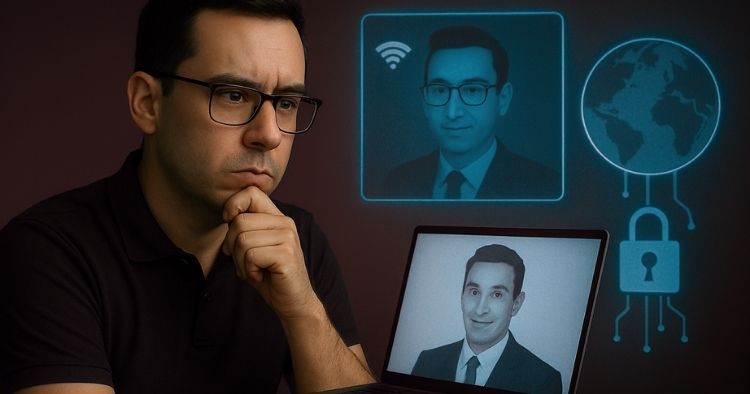
Deepfakes (a portmanteau of "deep learning" and "fake") are images, videos, or audio that have been edited or generated using AI tools or audio-video editing software. They may depict real or fictional people and are considered a form of synthetic media.
As deepfakes improve, businesses are increasingly relying on biometric verification powered by machine learning to confirm human presence, shifting impersonation defense into a continuous AI-versus-AI dynamic. This Deepfake Detection Guide provides techniques for detecting deepfakes through manual observation, automated tools, and organizational controls designed to prevent fraud even when detection is uncertain.
Gartner's survey, fielded between March and May 2025, found that deepfake attacks are now mainstream enough that most security leaders have dealt with one directly. A separate Gartner survey of 297 security leaders broke the exposure down by channel: 41% had faced a deepfake combined with social engineering on an audio call, and 35% on a video call. Entrust's 2026 Identity Fraud Report adds another data point from the identity-verification side: roughly 1 in 5 biometric fraud attempts it analyzed involved a deepfake.
In 2024, scammers used AI-generated video to impersonate senior staff at Arup during a video conference. A finance employee in Hong Kong was convinced to transfer HK$200 million (about $25.6 million U.S.) before the fraud was discovered.
Voice-based impersonation presents similar risk. According to Consumer Reports, some commercially available voice-cloning tools can produce convincing synthetic voices from very short audio samples, undermining voice familiarity as a reliable method of identity verification.
"Hackers are no longer breaking through firewalls; they're exploiting the trust employees place in a familiar face or voice," said Rich Miller, Founder and CEO of STACK Cybersecurity. "Businesses that haven't built verification into their workflows are relying on something attackers have figured out how to fake."
Free Download
Deepfake Compliance Checklist
TAKE IT DOWN Act requirements, 30-state election disclosure obligations, and internal controls for every business type.
Why Deepfake Risk Is Escalating in 2026
Deepfake attacks are becoming easier to launch because generative AI tools are cheaper, faster, and more accessible than ever. What once required specialized expertise can now be created using consumer-grade platforms in minutes.
Many firms are also struggling with Shadow AI, where employees adopt unsanctioned generative AI tools without formal security oversight. Check out our AI governance checklist.
Businesses are also facing increasing legal and regulatory pressure. New state AI laws, evolving privacy requirements, and the federal TAKE IT DOWN Act are pushing companies to develop policies for synthetic media, impersonation defense, and rapid response procedures.
At the same time, attackers are combining deepfakes with traditional business email compromise (BEC), SMS phishing, and account takeover tactics, creating multi-channel fraud campaigns that are harder to identify and contain.
Manual Detection: What to Look For
Deepfake technology continues to improve, but synthetic media often still contains subtle artifacts. No single indicator is definitive, but multiple anomalies in combination are a stronger signal that content may be manipulated.
Eyes and Blinking
Human blinking varies by person and situation, but blink duration is commonly cited in the 0.1 to 0.4 second range. Deepfakes may show abnormal blinking patterns, including blinking that is too frequent, too infrequent, mechanically regular, or absent.
Look for eyes that appear fixed or staring, with movements that seem disconnected from the scene. Examine eye reflections carefully. In authentic video, reflections in both eyes generally match the visible light sources in the environment. Inconsistent reflections between eyes, or reflections that do not correspond to the scene, can be indicators of manipulation.
Pupil behavior can also look off. Real pupils adjust based on lighting and focus. Deepfaked eyes may show pupils that remain static when they should dilate or constrict.
Facial Features and Skin
Pay attention to skin texture. Real skin contains natural variation: pores, wrinkles, freckles, uneven tone, and subtle shadows. Deepfakes may smooth these details into an overly uniform, waxy, or airbrushed appearance that can feel uncanny.
Watch for facial features that do not seem cohesive. The eyes might look sharper than the surrounding skin, or the teeth might appear distorted or unnaturally uniform. Facial hair can be a weak point. Mustaches, sideburns, and beards may appear inconsistent or fail to move naturally with facial expressions.
Look for expressions that shift abruptly rather than transitioning smoothly, or facial movements that do not feel coordinated across the whole face.
If you want hands-on practice, Detect Fakes lets you test your ability to distinguish manipulated video from real video.
Lip Synchronization
Matching lip movements to speech requires coordinating dozens of tiny facial muscles and remains a common failure point. Watch for mouth shapes that do not match sounds, particularly "p," "b," and "m" where lips close, and "f" and "v" where the lower lip contacts the upper teeth. Slowing down playback can make errors easier to spot.
Lighting and Shadows
Realistic lighting requires the content to follow the physical rules of a scene. Examine whether shadows on the face match the apparent direction of light sources. Look for shadows that appear at the wrong angles, change inconsistently between frames, or do not align with other objects in the scene.
Check whether the subject's overall lighting matches the environment. If a person appears brightly lit while the background is dark, or vice versa, the content may have been composited from different sources.
Edge Artifacts and Motion
Deepfakes often require blending a synthetic face onto an existing video. This can leave artifacts at boundaries: blurry edges where the face meets hair or neck, flickering outlines, or a subtle "halo" around the face. These are often easier to see when the subject turns their head or moves quickly.
Watch for unnatural body movement: jerky gestures, heads that seem disconnected from bodies, or hair and accessories (glasses, earrings) that do not move naturally with the person.
Audio Indicators
Audio deepfakes can sound unusually clean, oddly paced, or emotionally flat. Listen for robotic undertones, awkward pauses, or rhythm that feels unnatural. Background noise can also be a tell. Real recordings typically contain some ambient sound and room echo consistent with the environment.
Listen for inconsistencies in emotional tone and conversational timing. AI-generated voices may respond too quickly, pause unnaturally, or fail to match the emotional intensity expected in the situation. Interruptions and overlapping speech can also cause synthetic voices to behave unpredictably.
Pay attention to pronunciation drift. Some voice cloning systems struggle with uncommon names, technical terminology, acronyms, or rapid topic changes, particularly during live conversations.
Automated Detection Tools
Automated detection tools analyze technical signals that humans struggle to evaluate consistently at scale. They typically return probabilistic confidence scores, not binary verdicts, and effectiveness varies with compression, recording quality, environmental noise, and the novelty of the generation technique.
Real-Time Communications Defense (Netarx)
Based in Farmington Hills, Mich., Netarx provides real-time deepfake and impersonation defense across voice, video, email, SMS/messaging, and images, surfacing simple in-workflow indicators (green/yellow/red) to help employees judge the trustworthiness of live interactions. It uses multiple AI models plus metadata/device context and can be deployed as software-as-a-service (SaaS) with agents and browser extensions.
Identity Proofing and Account Recovery (Okta + Partners)
Okta provides the identity platform; deepfake-resistant ID verification is commonly handled via partners such as Nametag (Deepfake Defense) and Incode, which integrate with Okta to harden onboarding and recovery against AI impersonation.
Asynchronous Screening and Investigation (Reality Defender, Sensity)
Reality Defender offers multi-model screening via API and browser UI for AI-generated or manipulated media, suitable for trust and safety or moderation teams. Sensity AI focuses on investigation-oriented detection and reporting across video, images, and audio for legal and compliance workflows.
Detection Tools at a Glance
| Tool | Channels Covered | Deployment | Best For |
|---|---|---|---|
| Netarx | Voice, video, email, SMS/messaging, images | SaaS, device agent, browser extension | Real-time defense during live calls and meetings |
| Okta + Nametag/Incode | Identity verification at login and recovery | Identity platform plus partner integration | Onboarding and account recovery hardening |
| Reality Defender | Video, image, audio | API and browser UI | Asynchronous screening for trust and safety teams |
| Sensity AI | Video, image, audio | Investigation-oriented platform | Legal and compliance investigation workflows |
| Pindrop | Voice/phone | Call center integration | High-volume call centers and phone-based transactions |
How to Evaluate Tools
Most companies pair email security (Proofpoint/Abnormal) with identity proofing (Okta + partners) and add real-time communication defense (Netarx) for live interactions. For content you receive or host (user uploads, marketplace listings), consider Reality Defender or Sensity for asynchronous screening. Use Pindrop if you run a high-volume call center or handle sensitive transactions by phone.
Tool Limitations
No detection tool is perfect. Common issues include false positives triggered by compression or low-quality recordings, new synthesis methods that temporarily evade detectors, and the computational cost of real-time analysis. Most tools provide probabilistic assessments rather than definitive answers.
The most effective approach combines automated screening with human review and contextual verification for high-stakes content.
Organizational Controls
Detection alone cannot fully protect against deepfake fraud. Sophisticated attacks may evade both human observation and automated tools. Businesses need process controls that prevent fraud even when detection fails.
Multi-Person Authorization
Require multiple people to approve financial transactions above a defined threshold, regardless of who appears to be requesting it. Apply the "four eyes" principle to high-value payments, vendor banking detail changes, and unusually urgent requests so that no single person can complete a risky action alone.
Out-of-Band Verification
Establish protocols requiring verification through a separate, pre-established channel for unusual requests. If you receive a video call requesting an urgent transfer, verify through a different channel using known contact information from your directory, internal messaging, or in-person confirmation when possible.
Bloomberg reporting describes a Ferrari impersonation attempt (PDF) involving a convincing voice imitation of CEO Benedetto Vigna that failed after an executive used a personal verification question.
Communication Platform Controls
Deepfake fraud often begins on personal platforms. Set policies that financial and sensitive requests must use official corporate systems. Train employees to treat "use my personal app," "my number changed," or "keep this off email" as high-risk signals.
Employee Training
Training should cover both deepfake recognition and social engineering patterns, with practice spotting manipulated media. The MIT Media Lab's Detect Fakes site was built to let people test their ability to recognize deepfakes.
Training should emphasize that seeing someone on video or hearing a familiar voice does not confirm identity. Build a culture where verification is expected and welcomed rather than perceived as distrust.
Incident Response Planning
Develop procedures for responding to suspected deepfake attacks, including steps to halt pending transactions, escalation paths that do not rely on potentially compromised channels, and rapid notification to financial institutions for suspected fraudulent transfers. Speed matters in fraud response.
Real-World Case Studies
Arup: HK$200 Million Video Conference Fraud (2024)
Reporting on the Arup case describes how scammers used deepfake video of colleagues during a video conference to convince a Hong Kong employee to transfer HK$200 million.
Lessons: video verification is not identity verification. Out-of-band verification and multi-person authorization reduce the chance of a single point of failure.
LastPass: Employee Recognizes Red Flags (2024)
LastPass reported an attempted voice phishing incident in which an employee received calls, texts, and at least one voicemail featuring an audio deepfake impersonating the CEO via WhatsApp.
Lessons: platform choice, urgency, and off-hours contact are often stronger tells than media artifacts. Train people to report quickly instead of engaging.
WPP: Multi-Stage Impersonation Attempt (2024)
Reporting on the WPP incident describes scammers creating a fake WhatsApp account and setting up a Microsoft Teams call to impersonate CEO Mark Read using AI-based techniques.
Lessons: modern attacks can be multi-stage and multi-platform. Requests involving both money and personal information should raise the escalation level immediately. Many companies rely on virtual CISO services to develop AI governance policies, fraud response procedures, and executive security controls.
Verification Checklist
When receiving requests for financial transactions, sensitive information, or unusual actions from apparent executives or colleagues:
Channel verification: Did the request arrive through official corporate channels? Is this how this person normally communicates? Am I being asked to use an unusual platform or method?
Request characteristics: Is there unusual urgency or pressure? Is secrecy being emphasized? Does this request fall outside normal procedures? Would this person normally make this request directly to me?
Identity verification: Can I verify identity through a separate, pre-established channel? Can I call back using known contact info from a trusted directory? Can I ask a question only the real person would know?
Technical indicators: Does the video show anomalies (lighting, blinking, lip sync, edges, skin texture)? Does the audio sound natural for the environment? Can I run the content through a detection tool?
Process controls: Does this transaction require additional authorization? Have I documented this request appropriately? Should I escalate before proceeding?
When in doubt, slow down. Legitimate requests can wait for verification. Fraudulent ones usually cannot withstand it.
What This Means for Your Business
The cases above share a common thread: attackers did not exploit unpatched software or brute-force their way into a network. They exploited trust. A convincing video call or a familiar voice paired with a sense of urgency was enough to bypass controls that no technical tooling alone can replace.
Building a verification culture requires more than a policy document. It requires training employees to pause, confirm through a separate channel, and feel empowered to slow down even when a request appears to come from the top. The Ferrari case demonstrates that a simple personal question can defeat a sophisticated impersonation attempt. Process discipline is the last line of defense when technology falls short.
Deepfake Risk by Industry
Deepfake fraud doesn't hit every industry the same way. The channel attackers use, and the control that stops them, tends to follow where the money and the sensitive decisions sit.
Manufacturers face deepfake-enabled vendor impersonation and wire fraud, often targeting accounts payable during a legitimate-looking banking detail change. Multi-person authorization on vendor banking updates closes most of this gap.
Law firms handle large client fund transfers and confidential case information, making them a target for deepfake calls impersonating partners or clients requesting urgent wire instructions. Out-of-band verification on any fund transfer request is the standard defense.
Financial services firms see deepfakes aimed at both employees, through executive impersonation, and customers, through voice-cloned calls to call centers attempting to bypass identity verification. Phishing-resistant MFA and liveness detection on voice channels both matter here.
Health care and behavioral health providers face a different angle: synthetic media used to forge consent, impersonate patients or providers, or manipulate telehealth sessions. Identity verification tied to a separate, pre-established channel is especially important where protected health information is involved.
Defense contractors are targeted less for immediate financial gain and more for access, deepfake impersonation of a known contact to extract credentials, technical details, or a foothold into a network governed by CMMC requirements. Verification culture and incident response planning matter as much as any single detection tool.
What Changed in 2026?
State AI legislation in 2026 has moved beyond deepfake bans alone, and it has also moved faster than most compliance calendars accounted for. Lawmakers are increasingly focused on companion chatbots, deceptive synthetic media, child safety, consumer protection, and the infrastructure that supports AI systems, including data centers, power use, and water consumption. For cybersecurity and compliance teams, the shift means AI governance now spans both content risks and operational risks, and several marquee state laws changed shape entirely over the course of the year.
Colorado is the clearest example of how unstable this landscape can be. The original Colorado AI Act (SB 24-205), passed in 2024, was never actually implemented. Its effective date slipped from February 2026 to June 30, 2026, then a federal magistrate judge stayed enforcement in April 2026 amid a constitutional challenge, and the Colorado Attorney General committed not to enforce the law while the legislature worked on a replacement. That replacement, SB 26-189, was signed May 14, 2026. It repeals the original AI Act outright and replaces it with a narrower law focused on automated decision-making technology, modeled more closely on California's privacy-style rules than the original's broad "high-risk AI system" framework. SB 26-189 takes effect Jan. 1, 2027, and rulemaking from the Attorney General's office is still in progress.
Washington and Utah moved in a different direction, both targeting companion chatbots and synthetic media rather than automated decision-making broadly. Washington's HB 2225, signed March 24, 2026, requires AI companion chatbot operators to disclose that users are interacting with AI, build in safeguards against manipulative engagement with minors, and maintain protocols for detecting self-harm risk; it takes effect Jan. 1, 2027, and gives users a private right of action. Utah's HB 276, also signed March 24, 2026, bans non-consensual AI-generated intimate images and creates digital content provenance requirements for large platforms and device manufacturers, with most provisions effective in 2027.
The pattern across all three states is the same even though the details differ: states are regulating not just what AI can generate, but how AI is deployed, who it affects, and where its infrastructure sits. A company tracking "Colorado's AI Act" by its 2024 description would currently have the wrong law, the wrong scope, and the wrong effective date. Compliance teams should treat state AI legislation as a moving target that needs continuous monitoring rather than a box checked once a year.
Concerned About Deepfake Fraud?
STACK Cybersecurity helps companies of all sizes strengthen approval workflows, deploy phishing-resistant MFA, assess AI-related business risk, and develop response procedures for impersonation attacks and synthetic media fraud.
Whether you need a cybersecurity assessment, policy guidance, or employee awareness training, our team can help reduce exposure to modern social engineering attacks.
Schedule a ConsultationFrequently Asked Questions (FAQs)
What is a deepfake?
A deepfake (a portmanteau of "deep learning" and "fake") is a video, image, or audio clip generated or manipulated using AI tools to make a person appear to say or do something they did not. Modern deepfakes can be highly convincing, particularly in compressed video or low-bandwidth call environments where quality artifacts are harder to spot.
How common are deepfake attacks on businesses?
A Gartner survey of 302 cybersecurity leaders, fielded in spring 2025, found that 62% of organizations experienced a deepfake attack involving social engineering or exploitation of automated processes within the prior 12 months. A separate Deloitte poll found that nearly 26% of executives reported their company experienced at least one deepfake incident specifically targeting financial or accounting data in a 12-month period. High-profile cases involving Arup, WPP, and LastPass demonstrate that no industry or company size is immune.
Can you always detect a deepfake visually?
No. Detection rates depend on the quality of the deepfake, the viewing conditions, and the observer's experience. Low-resolution video calls, compressed recordings, and high-quality synthesis tools all make visual detection less reliable. Manual observation should be combined with automated tools and process controls rather than treated as a standalone defense.
What is out-of-band verification?
Out-of-band verification means confirming a request through a separate, pre-established channel rather than continuing on the channel where the suspicious request arrived. If a video call asks you to initiate a wire transfer, out-of-band verification means hanging up and calling the requester back using a number from your internal directory, not one provided during the call.
What should employees do if they suspect a deepfake?
Don't engage further with the suspicious request. Report it immediately through your company's incident response channel. If a financial transaction is already in motion, contact your financial institution as quickly as possible since speed is critical for reversing fraudulent transfers. Document what you observed, including the platform used, the nature of the request, and any anomalies you noticed.
Does cybersecurity insurance cover deepfake fraud losses?
Coverage varies significantly by policy and insurer. Some cyber insurance policies cover social engineering fraud, which can include deepfake-enabled wire transfer fraud, while others exclude it or require a separate endorsement. Review your policy with your broker and confirm whether social engineering coverage applies and what documentation requirements exist for a claim. A risk assessment can help identify gaps in your current coverage and controls.
Can Microsoft Teams, Zoom, or Google Meet calls be deepfaked?
Yes. Hackers can use AI-generated video and voice during live meetings to impersonate executives, vendors, coworkers, and clients. Some attacks use pre-rendered synthetic video, while more advanced attacks use real-time face and voice manipulation during active calls.
Video conferencing platforms themselves are not necessarily compromised. Instead, attackers abuse the trust people place in seeing and hearing familiar individuals during meetings. Businesses should treat video calls as one factor of identity verification, not proof of identity on their own.
Are deepfake attacks considered business email compromise (BEC)?
Often, yes. Many modern BEC attacks now include AI-generated audio, video, or text impersonation as part of a broader fraud campaign. Attackers may begin with phishing emails, then escalate to voice calls, messaging apps, or video meetings to pressure employees into approving payments or sharing sensitive information.
Security teams increasingly view deepfake fraud as an evolution of social engineering rather than a completely separate threat category.
Can AI-generated voices bypass MFA or identity verification?
In some cases, yes. AI-generated voices have been used to target call centers, password recovery workflows, and voice authentication systems. Entrust's 2026 Identity Fraud Report found that roughly 1 in 5 biometric fraud attempts it analyzed involved a deepfake. While many biometric platforms include liveness detection and anti-spoofing controls, no system is perfect.
Companies should avoid relying solely on voice recognition for high-risk account recovery or financial authorization processes.
How can businesses reduce deepfake risk?
The most effective defense combines employee training, identity verification procedures, financial approval controls, and detection technology. Key protections include multi-person approval for wire transfers, out-of-band verification for sensitive requests, phishing-resistant MFA, and regular social engineering awareness training.
Businesses should also establish incident response procedures specifically for impersonation attacks and synthetic media fraud scenarios.
Are deepfakes illegal?
Legality depends on how the deepfake is used. Some uses of synthetic media are lawful, including entertainment, parody, accessibility, and creative applications. However, deepfakes used for fraud, harassment, election interference, identity theft, extortion, or non-consensual intimate imagery may violate federal or state laws.
What is synthetic media?
Synthetic media refers to digital content generated or modified using artificial intelligence. This includes AI-generated images, video, audio, text, and avatars. Deepfakes are one category of synthetic media focused on realistic impersonation or manipulation of people.
Synthetic media can be used legitimately for entertainment, accessibility, marketing, and creative applications, but it can also be abused for fraud, misinformation, and impersonation attacks.
Can scammers clone a voice from social media videos?
Yes. Many modern voice-cloning tools can generate convincing synthetic speech using only short audio samples taken from social media videos, podcasts, webinars, interviews, or voicemail greetings. Public-facing executives and sales staff are especially exposed because hackers can often find hours of recorded speech online.
Businesses should assume publicly available audio can potentially be used for impersonation attempts and build verification controls accordingly.
Regulatory requirements are evolving rapidly. Businesses should monitor state disclosure laws, privacy regulations, and platform liability requirements related to AI-generated content.
What is a voice cloning scam?
A voice cloning scam uses AI-generated speech to impersonate a trusted individual such as an executive, employee, family member, vendor, or financial institution representative. Hackers use cloned voices during phone calls, voicemails, or video meetings to pressure victims into transferring money, revealing credentials, or bypassing security procedures.
These scams often rely on urgency, secrecy, and emotional pressure rather than technical sophistication alone.
Should businesses create a deepfake response policy?
Yes. Businesses should establish formal procedures for verifying sensitive requests, reporting suspected impersonation attempts, preserving evidence, and escalating potential fraud incidents. Policies should also define who is authorized to approve payments, change banking information, or release sensitive data.
Can deepfake scams target small businesses?
Yes. Small and midsize businesses are increasingly targeted because attackers often assume they have less formal approval processes and fewer dedicated security controls. A small finance team, limited segregation of duties, or informal communication culture can make impersonation attacks easier to execute successfully.
Deepfake fraud is no longer limited to large enterprises or public companies.
Can deepfakes bypass video identity verification systems?
Some deepfake systems are capable of challenging basic identity verification workflows, particularly those relying only on static facial matching or low-friction selfie checks. Many modern verification platforms now include liveness detection, device intelligence, and behavioral analysis to reduce spoofing risk.
Companies handling regulated data or financial transactions should evaluate whether their identity verification providers include anti-deepfake protections.
What are the warning signs of an AI impersonation attack?
Common warning signs include unusual urgency, requests for secrecy, pressure to bypass standard procedures, communication from unfamiliar numbers or accounts, requests to move conversations to personal platforms, and financial instructions that differ from normal workflows.
Technical anomalies such as unnatural speech rhythm, inconsistent lighting, lip-sync issues, or visual artifacts may also appear, but behavioral indicators are often more reliable than media quality alone.
Can attackers create real-time deepfakes during live calls?
Yes. Some advanced tools can manipulate facial appearance and voice output during live video or audio conversations in near real time. These systems are becoming more accessible as generative AI technology improves and hardware requirements decrease.
Businesses should assume that live communication channels can potentially be spoofed and should maintain verification procedures for high-risk requests.
Are executives at higher risk for deepfake impersonation?
Yes. Executives are common targets because their authority can override normal skepticism during financial or operational requests. Public appearances, conference presentations, interviews, earnings calls, podcasts, and social media videos also provide attackers with training material for voice and facial cloning systems.
CEO fraud and executive impersonation attacks increasingly incorporate AI-generated media to appear more convincing.
Can deepfakes be used in hiring scams?
Yes. Some attackers use AI-generated video or manipulated identities during remote job interviews to conceal their real identity, location, or qualifications. Businesses have also reported cases involving synthetic resumes, AI-assisted interview responses, and impersonated candidates attempting to gain access to corporate systems.
Businesses should strengthen remote hiring verification procedures, especially for sensitive technical or privileged-access roles.
A documented response process helps reduce confusion during high-pressure incidents and improves consistency across departments.
How do deepfake attacks usually begin?
Many deepfake attacks begin with traditional social engineering techniques such as phishing emails, credential theft, social media research, or business email compromise. Attackers gather information about organizational structure, communication habits, vendors, and executive behavior before launching impersonation attempts.
The AI-generated media is often only one part of a larger fraud campaign designed to build credibility and urgency.
Can deepfake detection tools produce false positives?
Yes. Low-quality recordings, compression artifacts, poor lighting, unstable internet connections, and background noise can sometimes trigger false positives in automated detection systems. Human review and contextual verification remain important even when detection tools are deployed.
Businesses should treat detection scores as indicators of risk rather than definitive proof of manipulation.
How should finance teams respond to suspicious payment requests?
Finance teams should pause the transaction and verify the request using a separate trusted communication channel before proceeding. Employees should never rely solely on email, voice calls, or video meetings for high-risk financial approvals.
Businesses should document escalation procedures in advance so employees know exactly who to contact and what verification steps are required during suspected fraud attempts.
What's new in state AI legislation in 2026?
States have moved beyond deepfake bans and into broader AI rules, including chatbot disclosures, consumer protection, child safety, and infrastructure oversight. Colorado's original AI Act was repealed and replaced with a narrower law (SB 26-189) taking effect Jan. 1, 2027. Washington and Utah each passed new laws targeting companion chatbots and synthetic media, both signed March 24, 2026 and both taking effect in 2027.
Are deepfake laws now being paired with chatbot rules?
Yes. Many states are treating deceptive synthetic media and AI companion chatbots as related risks, especially where minors or vulnerable users are involved. Washington's HB 2225 is a good example of that trend, pairing chatbot disclosure requirements with child-safety provisions in a single law.
Do these laws apply only to election-related deepfakes?
No. While election disinformation remains a concern, many laws now cover impersonation, explicit content, fraud, harassment, and non-consensual synthetic media. Utah's HB 276, which bans non-consensual AI-generated intimate images and sets content provenance standards, reflects that broader scope.
How should businesses prepare for state-by-state AI compliance?
Track new laws continuously, review user disclosures, document AI use cases, and make sure legal, security, and product teams are aligned before deployment. Given how quickly laws like Colorado's have changed in 2026, treat any state law summary, including this one, as something to re-verify before relying on it for a compliance deadline.
What's the difference between deepfake laws and broader AI governance rules?
Deepfake laws target synthetic media and deceptive likenesses. Broader AI rules can cover chatbot behavior, consumer protections, hiring, insurance, pricing, licensing, and infrastructure. Colorado's replacement law, SB 26-189, is a narrower example than the state's original 2024 AI Act, since it focuses specifically on automated decision-making rather than AI systems generally.
Can phishing-resistant MFA help reduce deepfake risk?
Yes. While phishing-resistant MFA does not directly detect deepfakes, it helps reduce account compromise that often supports impersonation campaigns. Attackers frequently combine deepfake tactics with stolen credentials, session hijacking, or business email compromise.
Hardware security keys, passkeys, and FIDO2-based authentication are generally stronger protections than SMS-based MFA for high-risk accounts. Learn more about passwordless authentication.
Why are deepfake attacks difficult to stop?
Deepfake attacks are difficult to stop because they exploit human trust rather than only technical vulnerabilities. Attackers combine realistic AI-generated media with urgency, authority, emotional pressure, and compromised communication channels to influence employee behavior.
Detection technology continues to improve, but organizational controls and verification culture remain essential because no single technical solution can fully eliminate impersonation risk. Companies should regularly test executive impersonation and wire fraud scenarios through cybersecurity tabletop exercises.
Need Help Implementing AI Solutions?
STACK Cybersecurity provides comprehensive AI readiness assessments, including licensing analysis, security implementation, and ongoing monitoring. Check out our AI Hub.
Email: info@stackcyber.com
Phone: (734) 744-5300